

A Joint Perspective from Namaste Management & The Purple Swans
We live in a period where unpredictability is no longer an occasional disturbance but a constant condition. Economic volatility, technological disruption, climate imperatives, and geopolitical instability increasingly define the landscape in which organisations operate. For leaders, the challenge is not only to adapt to these changes but to find ways to transform uncertainty into advantage. In such an environment, innovation emerges not as a luxury but as a necessity. It demands more than either creativity or discipline alone; it requires the integration of both visionary imagination and structured execution.
A global Forrester survey commissioned by Google Cloud found that 80% of leaders underestimate the severity of threats facing their organizations, which often leaves them reactive rather than proactive in defence. And the Global Leadership Monitor (H1 2025) revealed that only 47% of CEOs proactively anticipate change and plan strategic transformation with a long-term vision; among other C-suite leaders, just 35% do the same.
This Insight presents the joint perspective of Namaste Management and The Purple Swans (TPS). Namaste brings the rigour of innovation governance and portfolio management, complexity analyses, and structured execution. TPS contributes the ethos of embracing unpredictability, their Fear-Forward-methodology, and creative ideation frameworks. Taken together, these perspectives offer a dual lens on innovation: the courage to imagine new possibilities and the discipline to deliver them. We argue that it is precisely this duality that allows organisations to thrive in an age defined by uncertainty.
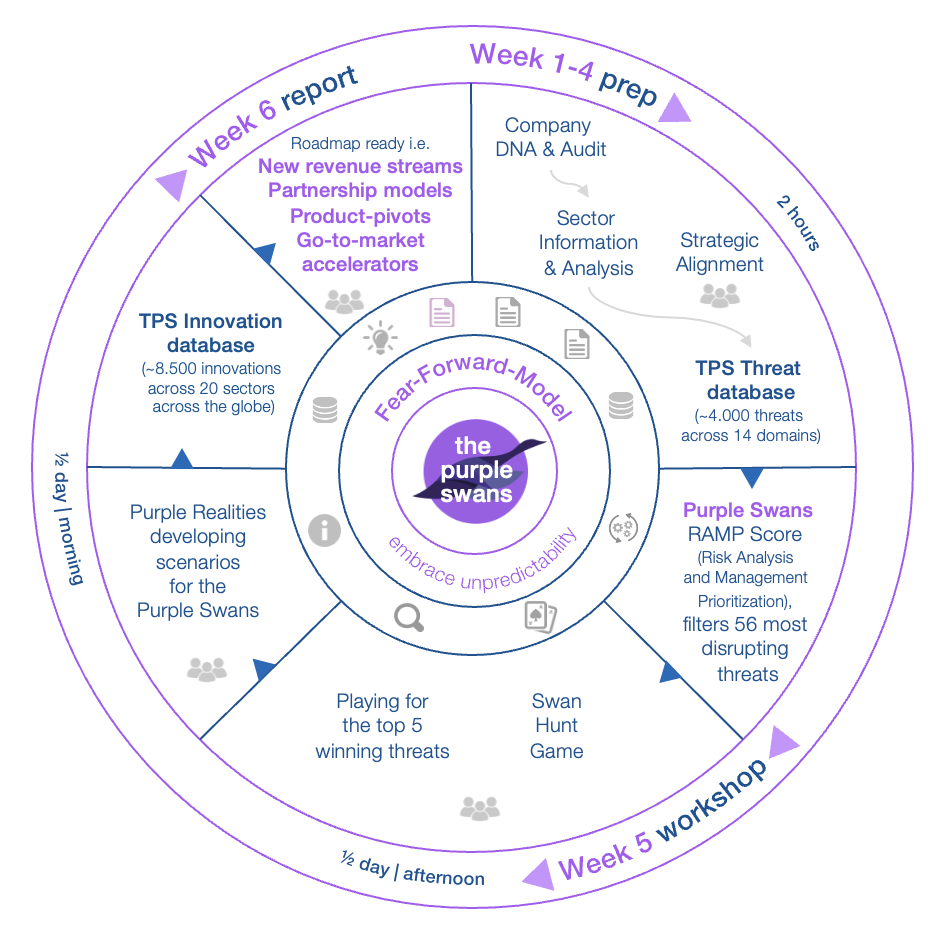
Figure 1 The Purple Swans Fear-Forward-Model
Innovation, when viewed through this dual lens, is not simply a matter of generating ideas. It is about creating a balanced system in which imagination and rigour work together. Excessive creativity without the anchor of discipline produces a proliferation of concepts that rarely progress beyond the whiteboard. Excessive structure without the spark of imagination risks optimising the present but failing to anticipate the future. Namaste and TPS reconcile this tension. TPS reframes threats as opportunities and introduces the Fear-Forward-Model, the Swan Hunt Game, and a proprietary threat and innovation database that exposes blind spots and cross- industry “best practices”. Namaste complements this with a structured innovation pipeline, stage-gate frameworks, and its Complexity Analysis tool that evaluates execution feasibility across a dozen factors ranging from regulatory exposure to supplier involvement. By sequencing imagination with discipline, organisations avoid the paralysis of endless brainstorming or the rigidity of overcautious planning, enabling them to move confidently from possibility to impact.
A full appreciation of innovation requires recognising its multidimensional nature. It does not confine itself to products alone but spans processes, business models, services, technologies, marketing, and even sustainability. In each of these domains, the dual contribution of TPS and Namaste becomes evident. TPS provokes unconventional thinking by encouraging co-creation, modular design, and risk- tolerant experimentation. Namaste ensures that these ideas are embedded in structured processes and systems that allow them to be validated, resourced, and scaled.
In product innovation, for instance, TPS pushes companies to reconsider what a product could be in rapidly changing markets, while Namaste ensures disciplined pipeline management and portfolio balance. In process redesign, TPS helps organisations look afresh at friction points in workflows, while Namaste applies lean principles, automation, and systematic efficiency tools.
In business model innovation, TPS provokes leaders to test subscription or outcome- based pricing models before disruption forces their hand, and Namaste ensures that such ideas are piloted and tested for viability. The same pattern holds true across services, technology, marketing, and sustainability: TPS sparks bold, creative thinking, while Namaste translates it into executable projects.
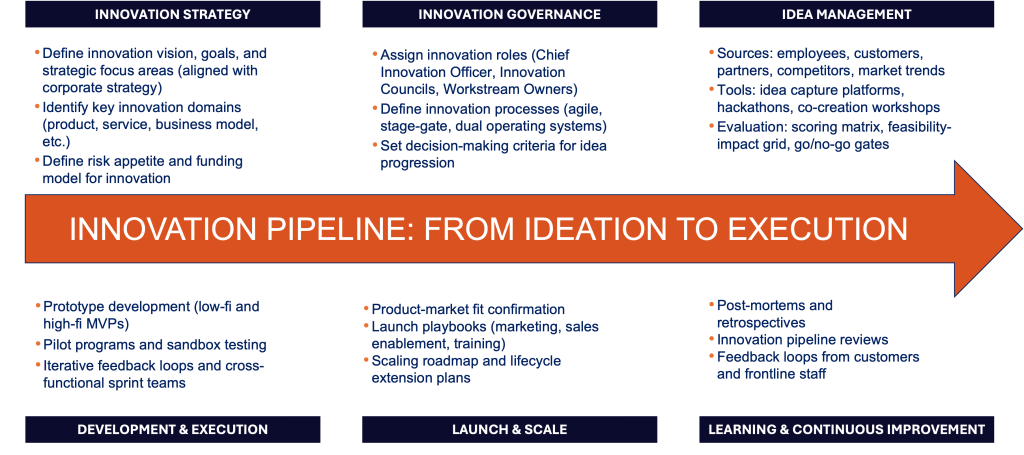
Figure 2 Namaste Management Innovation Pipeline Governance
The bridge from ideation to impact is often where innovation fails. Organisations frequently fall into the trap of generating exciting concepts that never translate into practice, or of pursuing overly cautious plans that stall before realisation. The Namaste–TPS playbook addresses this gap directly. TPS’s 6 weeks program help organisations uncover disruptive threats and convert them into high-impact opportunities. Using only two half days of a leadership team, the TPS program uncovers for instance new revenue streams, partnership models, product pivots, and go-to-market accelerators. Namaste then applies its Complexity Analysis, evaluating these ideas against twelve critical factors to determine feasibility, sequencing, and resource allocation. The combination ensures that ideas are not only imaginative but also actionable and sustainable, avoiding the common trap of overemphasising either inspiration or control at the expense of results.
Practical experience reinforces this approach. In the case of a food company facing supply chain disruption, TPS, by applying the Fear-Forward methodology, reframed the disruption as an opportunity. TPS suggested an innovative and proven idea to design a niche commodities exchange platform that stabilized supply, empowered smaller suppliers, and would reposition the company as a champion of equitable trade.
In another example, a global technology firm turned to Namaste for guidance on launching a new service model. By applying the Complexity Analysis, Namaste was able to assess risks across regulation, team dynamics, and supply chain involvement, enabling the company to roll out the initiative in phases that balanced boldness with resilience. These cases illustrate how the two perspectives complement each other: TPS excels in reframing threats into opportunities, while Namaste ensures that execution proceeds with discipline and sustainability.
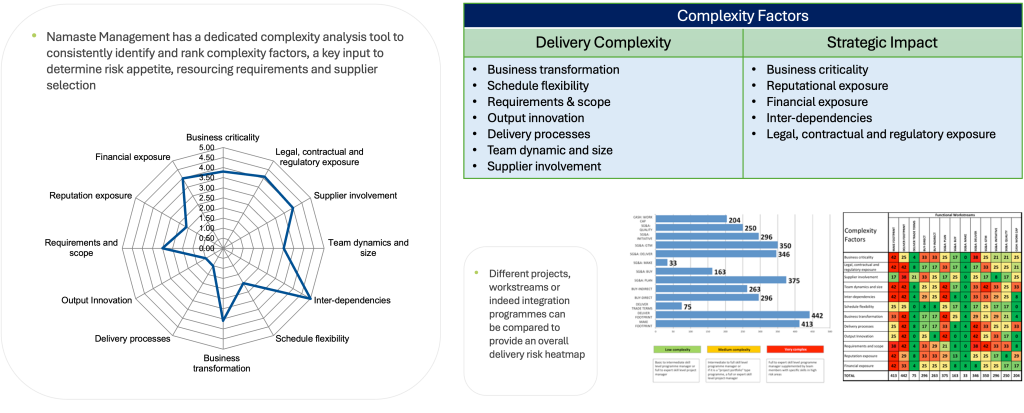
Figure 3 Namaste Management Project Execution Complexity Analysis Tool
Measurement is another essential aspect of innovation. Without clear metrics, innovation risks becoming little more than theatre. Namaste and TPS offer complementary approaches. Namaste focuses on structured measurement systems, tracking inputs, processes, outputs, efficiency, and strategic performance indicators such as R&D spending, time-to-market, and return on investment. TPS, by contrast, emphasises the identification of disruptive threats and the generation of executable growth opportunities, quantified through their proprietary RAMP (Risk Analysis and Management Prioritization) framework and unique innovation database of over 8.000 proven and quantifiable ideas. When combined, these approaches ensure that innovation is evaluated not only in terms of delivery and return but also in terms of readiness to withstand and leverage future uncertainties.
Organisations often encounter predictable pitfalls in their innovation efforts. Many operate in silos, pursue breakthrough projects at the expense of incremental improvements, validate ideas too weakly, or fail to scale promising initiatives. The dual lens of TPS and Namaste addresses these challenges. TPS ensures that ideation is broad, diverse, and infused with external and unconventional perspectives, while Namaste introduces clear decision criteria and sequencing to avoid wasteful experimentation. TPS frames bold strategic plays, and Namaste ensures that commercialisation is aligned with operational readiness. The combination systematically converts common vulnerabilities into strengths.
In conclusion, the organisations that will define the next era of growth are those that can both imagine bold futures and deliver them with discipline. By combining the ethos of TPS, embracing unpredictability as the most fertile ground for opportunity, with the structured systems of Namaste, leaders can build innovation engines capable of thriving in uncertainty. Creativity and structure are not opposites but complements. Those who unite them will not merely survive disruption but will harness it to shape the future.
Click here for more about The Purple Swans.
Click here for more about Namaste Management Services and Other Insights.